Documentary Photography vs Photojournalism
Documentary Photography vs Photojournalism
Introduction
Photography has long served as a medium for recording reality, preserving memory, and shaping public understanding. Among its many forms, documentary photography and photojournalism are frequently discussed together because both engage with real events and lived experiences. Yet despite their shared reliance on reality, they differ significantly in intention, pace, and visual philosophy. Understanding these distinctions reveals how photographs not only document events but also shape the ways audiences interpret truth.
What role does time play in photography?
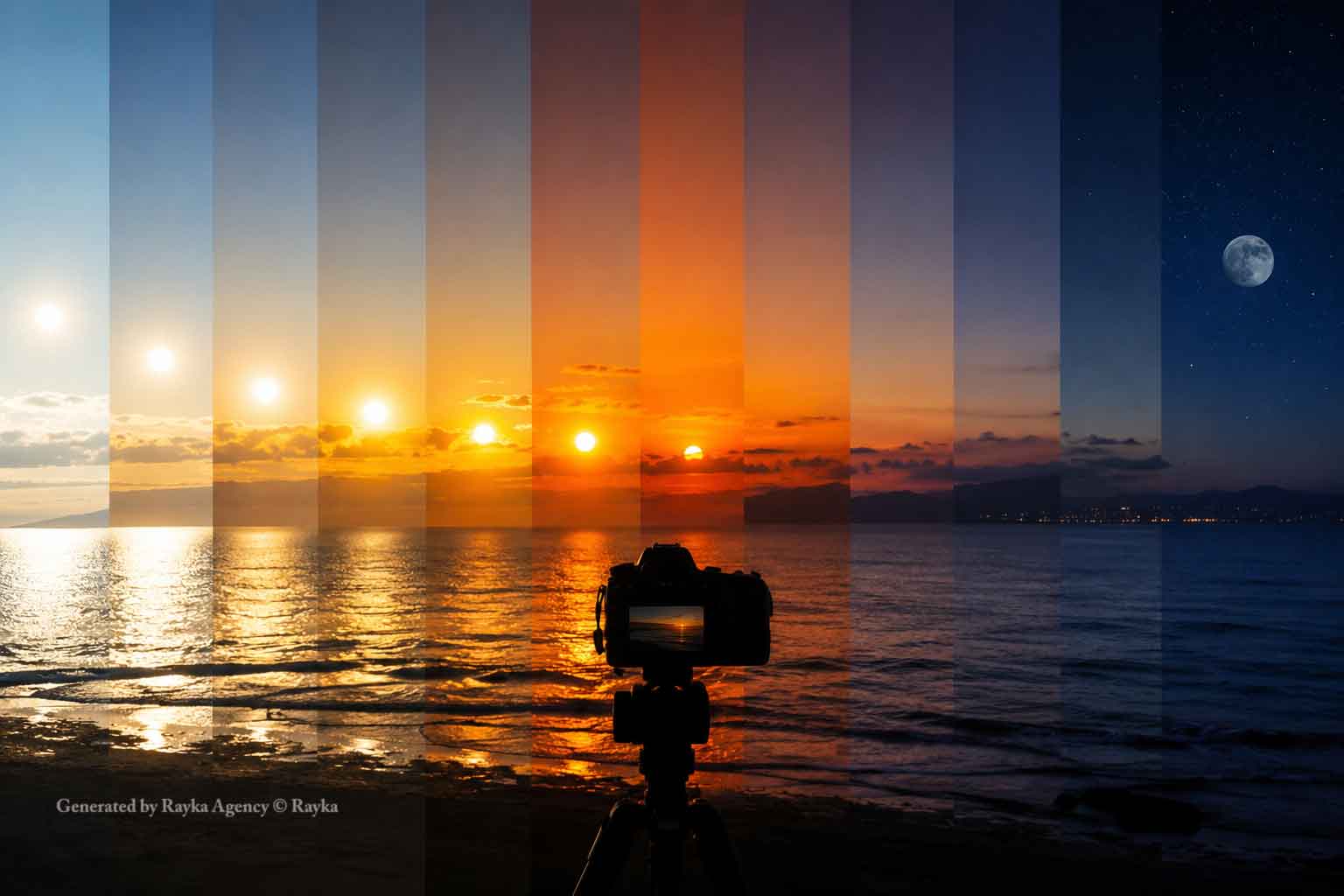
Time operates in photography on multiple levels. Technically, even slight variations in shutter speed transform visual perception. A slower exposure can soften edges and create atmosphere, while faster speeds isolate moments with precision. Photography therefore does more than reproduce appearances; it translates experience into visual interpretation. Images can evoke emotions, stimulate thought, and create lasting impressions.
Beyond the technical dimension, time also shapes meaning through duration. Days, months, or years spent observing a subject influence how stories are told. This long-term engagement often forms the basis of visual narratives and photo essays that contribute to collective historical memory.
Why does context matter?
Single images possess enormous power, but without context they can create incomplete interpretations. Documentary practice offers opportunities to show quieter realities: routines, environments, consequences, and emotional subtleties. It reveals not only dramatic events but also the spaces surrounding them.
Context is essential because photographs rarely exist as neutral pieces of information. Every image is shaped by framing, timing, perspective, and selection. A single frame can isolate an action from its causes and consequences, potentially leading viewers toward simplified conclusions. Without a broader narrative structure, photographs may present only fragments of reality rather than a more comprehensive understanding of lived experience.
Documentary photographers often work over extended periods, allowing them to observe relationships, social conditions, and changes that unfold gradually over time. This process provides space for complexity and encourages visual narratives that move beyond immediate reactions. Rather than emphasizing isolated moments of intensity, documentary work frequently examines the interconnected layers surrounding events and human experiences.
This does not diminish the value of photojournalism. News photographers perform essential work under difficult conditions and provide critical visual records of current events. Yet documentary practice often creates room for reflection, ambiguity, and deeper engagement beyond the urgency of headlines. By presenting broader context, documentary photography invites audiences not only to see what happened, but also to question why it happened and what it ultimately means.
What is documentary photography?
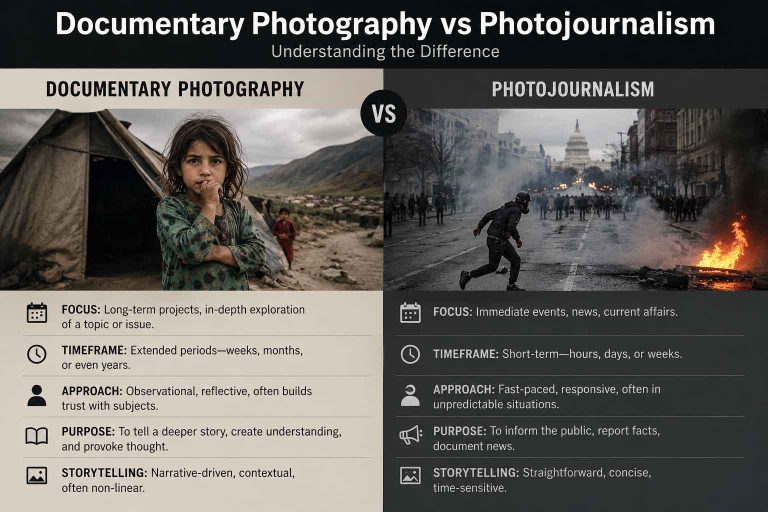
Documentary photography is a visual practice centered on investigating social realities, cultural environments, and human experiences through long-term observation. Documentary photographers frequently spend extended periods with their subjects, allowing narratives to emerge gradually. Rather than isolating a dramatic instant, documentary work seeks to reveal layers of life, complexity, and broader social context.
What is photojournalism?
Photojournalism is a branch of journalism that uses photographs to report news and current events. It emphasizes speed, factual accuracy, immediacy, and ethical reporting. Photojournalists often work under deadlines and are tasked with capturing decisive moments that communicate information quickly and efficiently.
How do their methods and goals differ?
Photojournalism generally responds to immediate events. It documents moments as they unfold and aims to inform audiences rapidly. Documentary photography, by contrast, develops through sustained observation. While photojournalism often asks what happened, documentary photography frequently investigates why events occur and how they are experienced over time.
The distinction also affects visual representation. Immediate news images may isolate moments from broader circumstances, whereas documentary work can reveal relationships, causes, and emotional realities that unfold gradually.
Why does context matter?
Single images possess enormous power, but without context they can create incomplete interpretations. Documentary practice offers opportunities to show quieter realities: routines, environments, consequences, and emotional subtleties. It reveals not only dramatic events but also the spaces surrounding them.
Context is essential because photographs rarely exist as neutral pieces of information. Every image is shaped by framing, timing, perspective, and selection. A single frame can isolate an action from its causes and consequences, potentially leading viewers toward simplified conclusions. Without a broader narrative structure, photographs may present only fragments of reality rather than a more comprehensive understanding of lived experience.
Documentary photographers often work over extended periods, allowing them to observe relationships, social conditions, and changes that unfold gradually over time. This process provides space for complexity and encourages visual narratives that move beyond immediate reactions. Rather than emphasizing isolated moments of intensity, documentary work frequently examines the interconnected layers surrounding events and human experiences.
This does not diminish the value of photojournalism. News photographers perform essential work under difficult conditions and provide critical visual records of current events. Yet documentary practice often creates room for reflection, ambiguity, and deeper engagement beyond the urgency of headlines. By presenting broader context, documentary photography invites audiences not only to see what happened, but also to question why it happened and what it ultimately means.
Conclusion
Although documentary photography and photojournalism share a commitment to reality and visual truth, they function through different storytelling frameworks. One emphasizes immediacy and public information; the other values duration, observation, and broader interpretation. Together they demonstrate photography’s ability not only to record events but also to deepen understanding of the world around us.